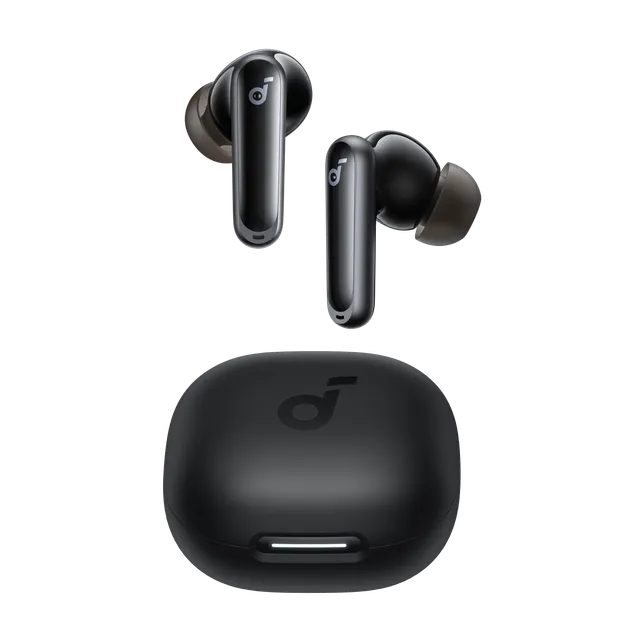
$20.00
We will hold your cart for 15:00.
Trains, coffee shops, airplane cabins, open-plan offices — the modern world is loud. The best solution isn't to move to a soundproof bunker. It's active noise cancellation (ANC), the technology that lets you press play and escape into your own quiet bubble.
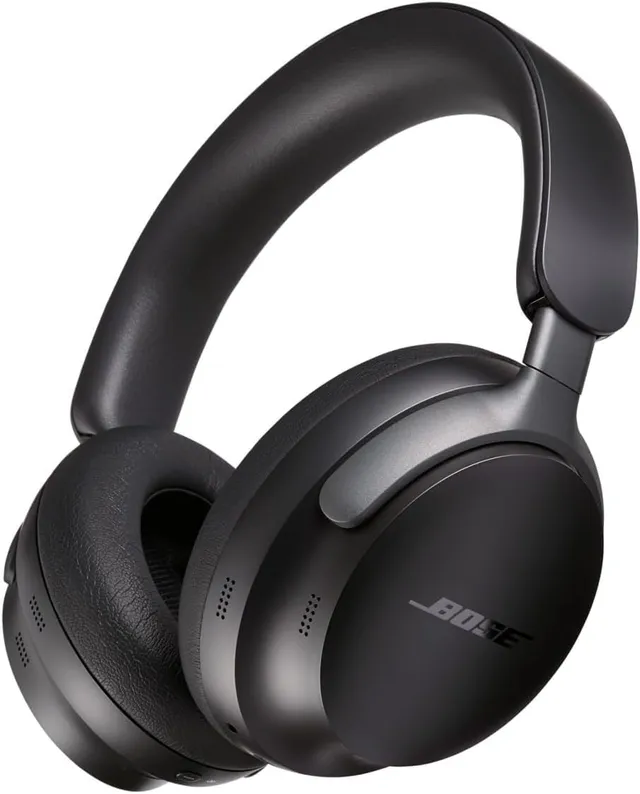
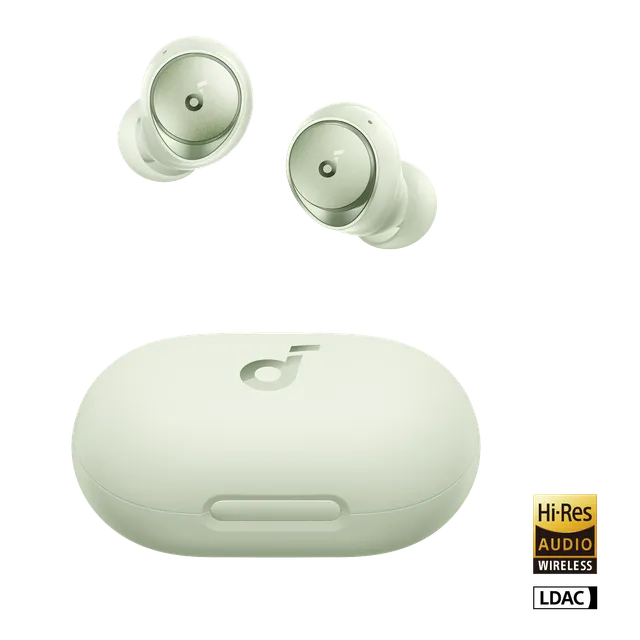
But how does it actually work? It's not just sealing your ears with foam. It's a precise, real-time application of physics using microphones, processors, and speakers. In this explainer, we'll break down the science, bust common myths, and show you how ANC performance varies across real products like the Bose QuietComfort Ultra and the budget-friendly Soundcore Space A40.
Sound travels through the air as a pressure wave — invisible ripples of compressed and rarefied air molecules. When those ripples hit your eardrum, it vibrates, and your brain interprets that as sound. The frequency of the wave determines pitch (a low bass hum vs. a high whistle), while the amplitude determines loudness.
Now, here's the clever bit: if you can create an identical wave that is perfectly inverted — a mirror image with peaks where the original has troughs — the two waves combine and cancel each other out. The result is silence. This is called destructive interference.
That's the fundamental principle behind ANC. Your headphones generate an 'anti-noise' wave that's the exact opposite of the incoming noise, effectively erasing it before it reaches your ear.
To achieve this, ANC headphones are packed with hardware:
Modern ANC systems use two types of microphones:
High-end models like the Bose QuietComfort Ultra combine both types (hybrid ANC) for the most complete cancellation.
Many people think a tight-fitting on-ear headphone blocks out noise just by sealing the ear. That's passive noise isolation. It's simply the physical barrier of foam, earcups, or silicone tips. It works best at higher frequencies (voices, background chatter) but does little for low-frequency rumble.
ANC, on the other hand, excels at low-frequency sounds — the constant roar of a jet engine, the hum of a bus, the drone of a refrigerator. These sounds are hard to block with a physical seal. But they're perfect for anti-noise waves.
So, the best approach is a combination: good passive sealing plus ANC. That's why over-ear headphones like the Sony WH-CH520 (which is actually an on-ear model without ANC) rely purely on seal — and why they can't compete with proper ANC in noisy environments.
If ANC is so clever, why don't we have total silence? Because the anti-noise wave has to be generated in real-time, and the physics has limits.
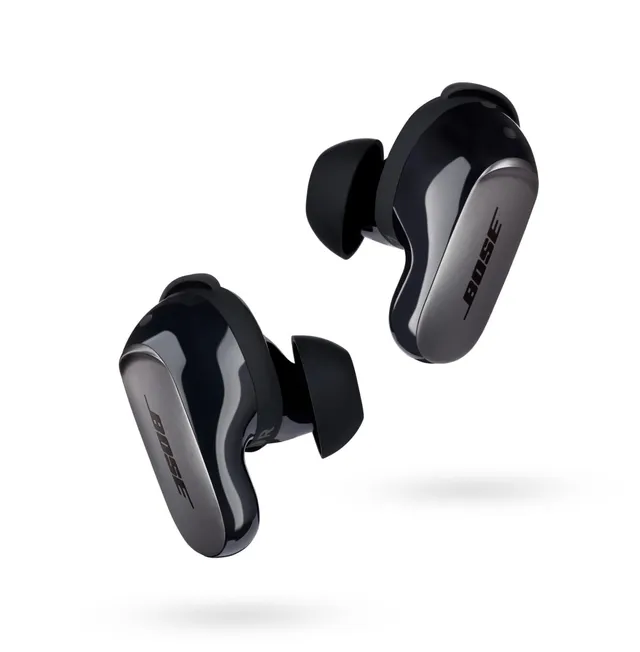
Some headphones, like the Bose QuietComfort Ultra Earbuds, offer various ANC levels (or 'transparency' mode) so you can tune how much outside world you want to let in.
ANC isn't just hardware; it's also software. Manufacturers like Bose, Sony, and Soundcore regularly release firmware updates that improve noise cancellation algorithms. That's why you should always keep your headphones updated.
The companion apps also offer features like:
For example, the Soundcore Space A40 offers customizable ANC modes in the Soundcore app, letting you dial in just the right amount of filtering.
To see how ANC stacks up, we look at three different tiers:
| Headphones | ANC Type | Real-World Performance |
|---|---|---|
| Sony MDR-ZX110 | None (passive only) | No ANC, but decent seal for its ultra-budget price. |
| Soundcore P40i | Adaptive ANC | Excellent bang for buck; cancels constant rumble well, but lets more voice through. |
| Bose QuietComfort Ultra | Hybrid ANC + CustomTune | Best-in-class; virtually silence on a plane, with less pressure. |
As you'd expect, you pay more for better ANC. But the budget picks like the Soundcore P40i or Space A40 still deliver a remarkable level of quiet for the price.
Absolutely. ANC itself doesn't produce harmful radiation or sound. The anti-noise wave is just a regular sound wave at a low volume. In fact, ANC can be beneficial to your hearing because you won't be tempted to crank the volume to overpower loud noise.
Some people report a feeling of 'pressure' or 'suck' with ANC. This is caused by your brain trying to interpret the unnatural silence. It's generally harmless and goes away with time. Choosing headphones with 'transparency' mode can help you switch back to hearing the world when you need to.
ANC technology is mature, but you don't have to pay flagship prices. The Soundcore Space A40 (Refurbished) offers adaptive ANC for under $60. We've inspected it: it comes with fresh ear tips, a clean case, and a warranty, so you get all the noise-cancelling features for much less than new.
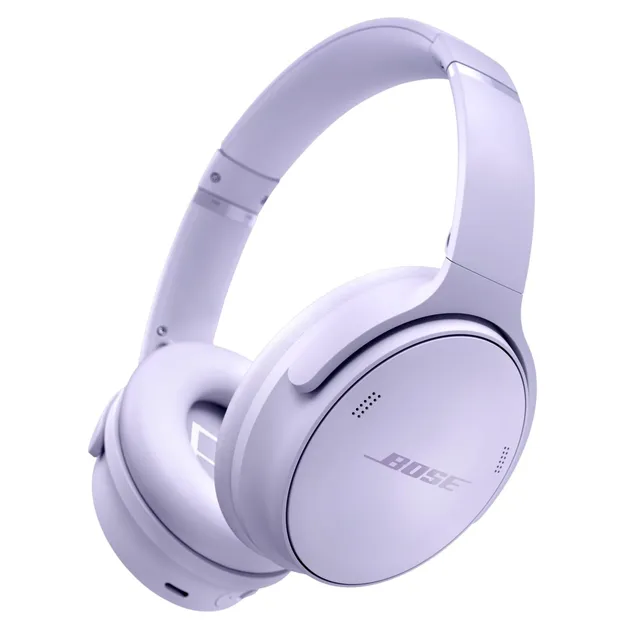
Even the Bose QuietComfort Wireless (Chilled Lilac Limited Edition) — a premium over-ear pair — can get a discount if you catch a sale. The tech inside is nearly identical to the flagship Ultra; the main differences are spatial audio and the latest CustomTune feature.
Let's clear up a few things:
The right choice depends on your needs:
If you're on a tight budget, remember that any ANC is better than none — but for the most satisfying experience, our editors recommend the Bose QuietComfort line for sheer quiet.
Active noise cancellation is one of the most practical audio technologies. It makes travel less tiring, helps you focus, and protects your hearing. While the physics is complex, the benefit is simple: you control your soundscape.
At Transit Tone, we've tested both flagship and budget ANC gear. If you're ready to experience the silence for yourself, check out our curated collection above. And if you have questions, our team is here to help.
Orders over $45.00 ship free. Otherwise, shipping is $8.00.
Hassle-free returns
SSL encrypted checkout
100% genuine products
Portable speakers from Sony, Soundcore, Bose & Marshall. Find your ideal sound anywhere.
Email: support@transittone.shop
Address: 4827 Harborview Lane, Suite 210, Portland, OR 97205, United States